
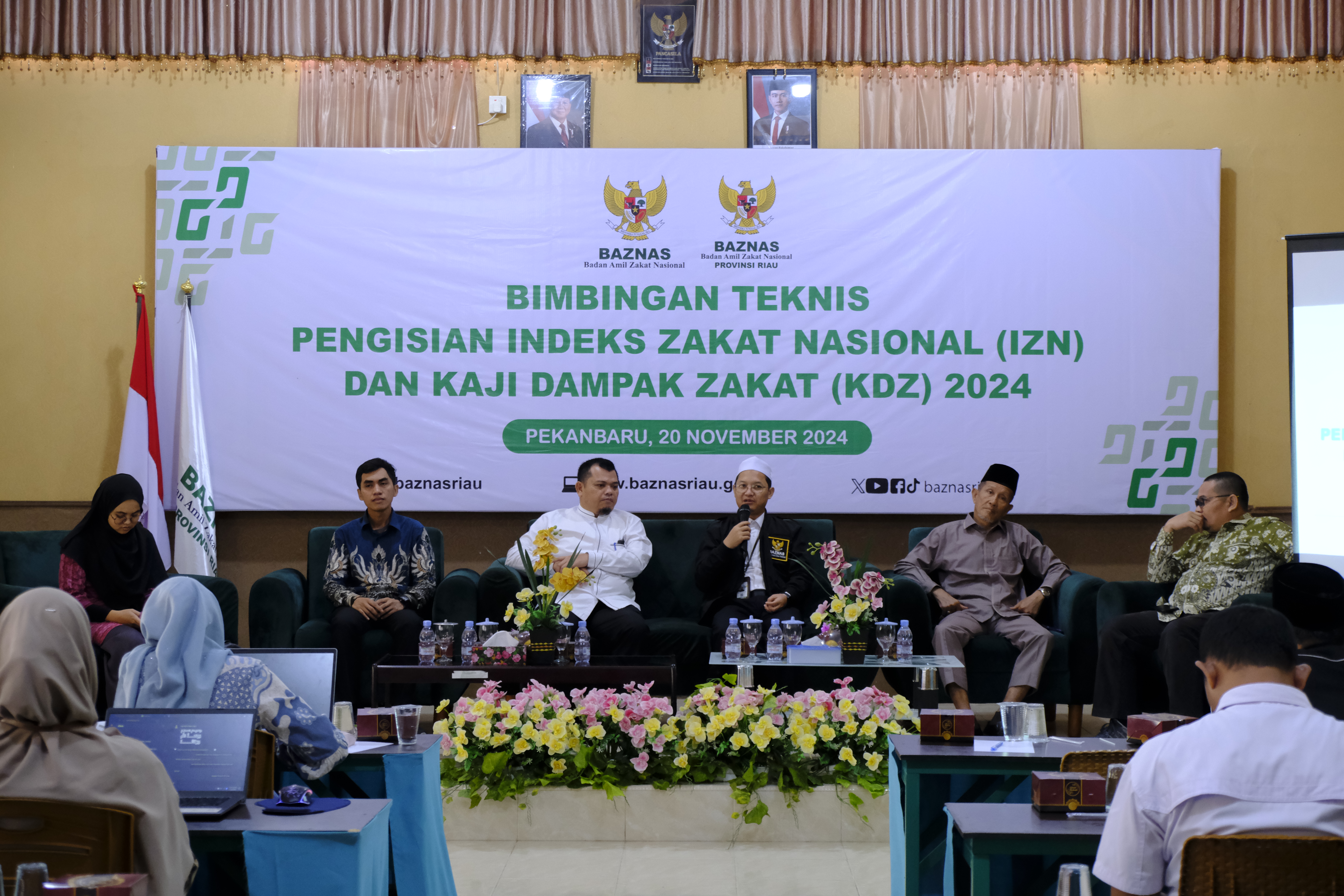
Pekanbaru, November 20, 2024 – BAZNAS RI reaffirmed its commitment to strengthening zakat governance at the regional level through the Technical Guidance on Filling the National Zakat Index (IZN) and Zakat Impact Study (KDZ) for 2024. This event, held in Pekanbaru, was attended by representatives from BAZNAS in all regencies/cities in Riau Province and the leadership of BAZNAS Riau Province, including Deputy Chair II, Jamaluddin, S.Ag., M.Sy., Deputy Chair III, Mester H. Hamzah, S.Ag., MH., and Deputy Chair IV, Drs. H. M. Aziz, MM., MA.
The main focus of this event was an in-depth discussion of the National Zakat Index (IZN), a comprehensive measurement tool assessing the success of zakat management from planning to reporting. The region-based IZN serves as a strategic guide for regional BAZNAS in identifying strengths and opportunities for improvement, ensuring zakat management is more measurable and effective. Additionally, the results of the Zakat Impact Study (KDZ) were a primary highlight, providing a clear overview of zakat management conditions in Riau and forming the foundation for strategic plans to strengthen zakat for 2024-2025.
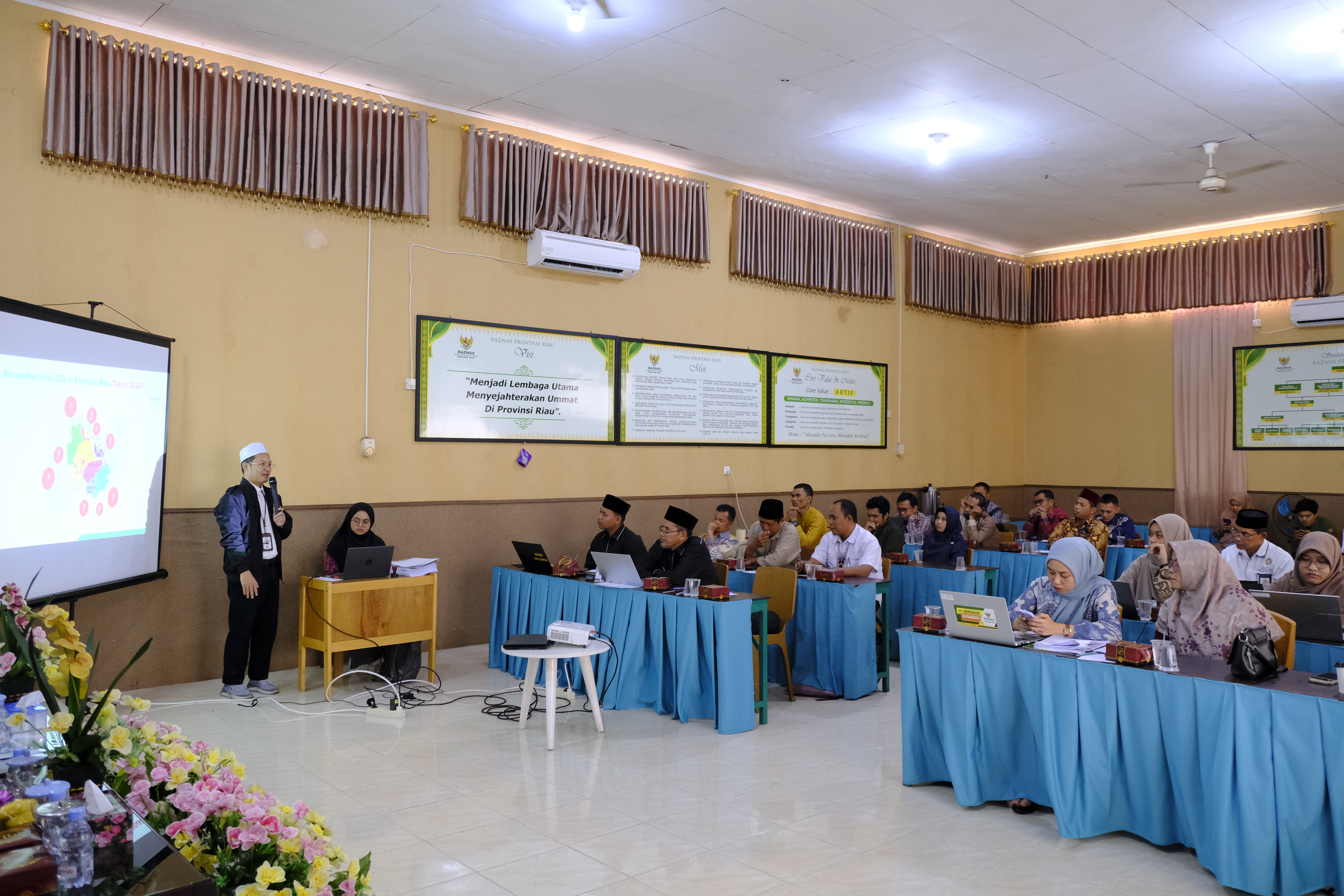
The event took place from 9:00 AM to 4:00 PM. The first session began with a detailed presentation on the concepts of the National Zakat Index (IZN) and Zakat Impact Study (KDZ) delivered by the Director of the Directorate of Studies and Development, Mr. Muhammad Hasbi Zaenal, Ph.D. After the midday prayer break, the program continued with a technical guidance session on filling out the IZN and KDZ 2024 forms, led by Ms. Farras Syafiqah, M.E. Both sessions were conducted interactively, with participants actively engaging in discussions and posing relevant questions. The enthusiasm displayed by the participants reflected their strong interest and commitment to optimizing zakat management in the region, as well as their eagerness to deepen their understanding of the strategic concepts presented.
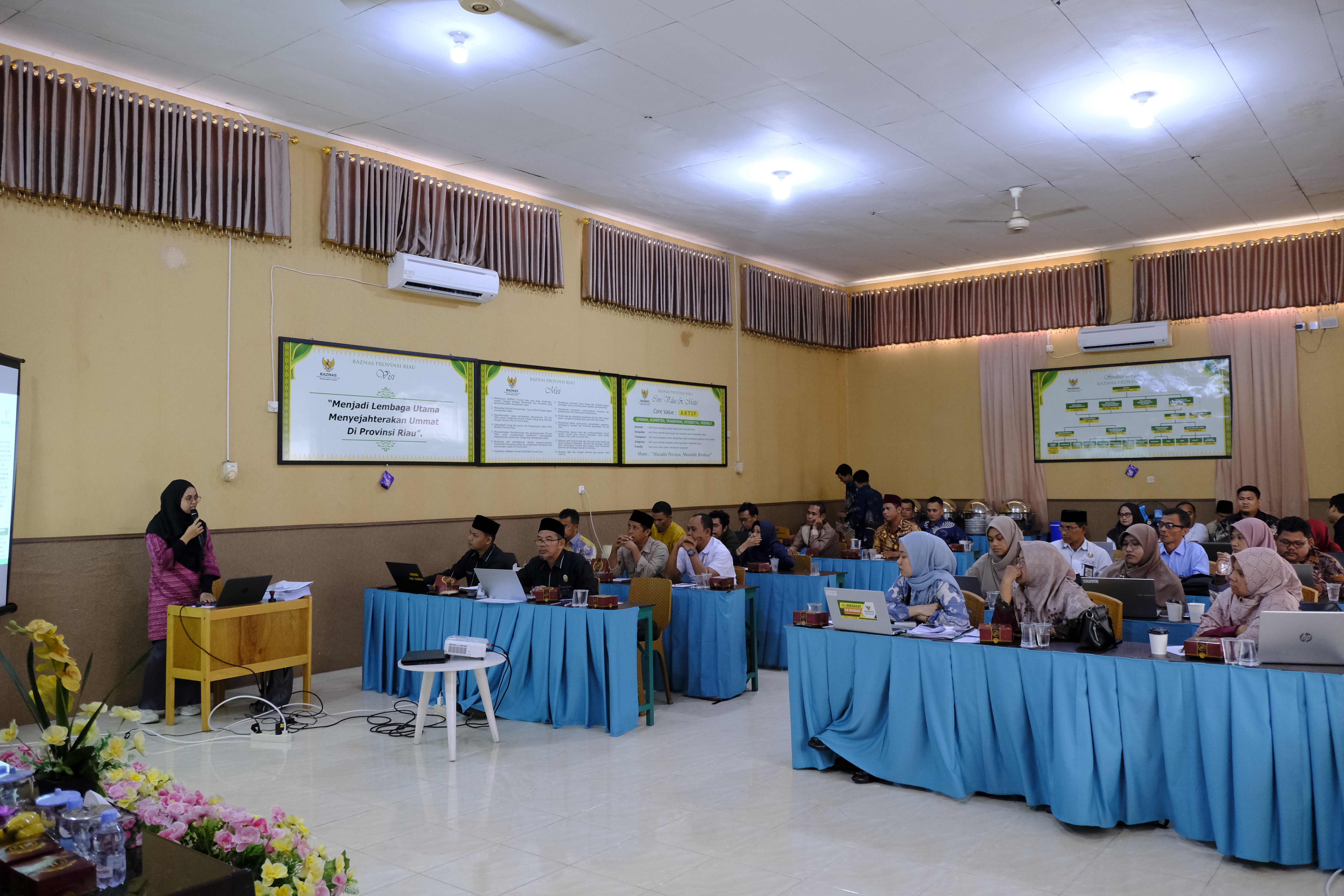
This initiative is expected to enhance the competencies of regional BAZNAS. With focused guidance, BAZNAS in Riau is anticipated to provide greater benefits to mustahik communities. Through this activity, BAZNAS reaffirms its role as the Main Institution for Empowering the Ummah, continuing to actively build a national zakat ecosystem that is inclusive, competitive, and sustainable.