
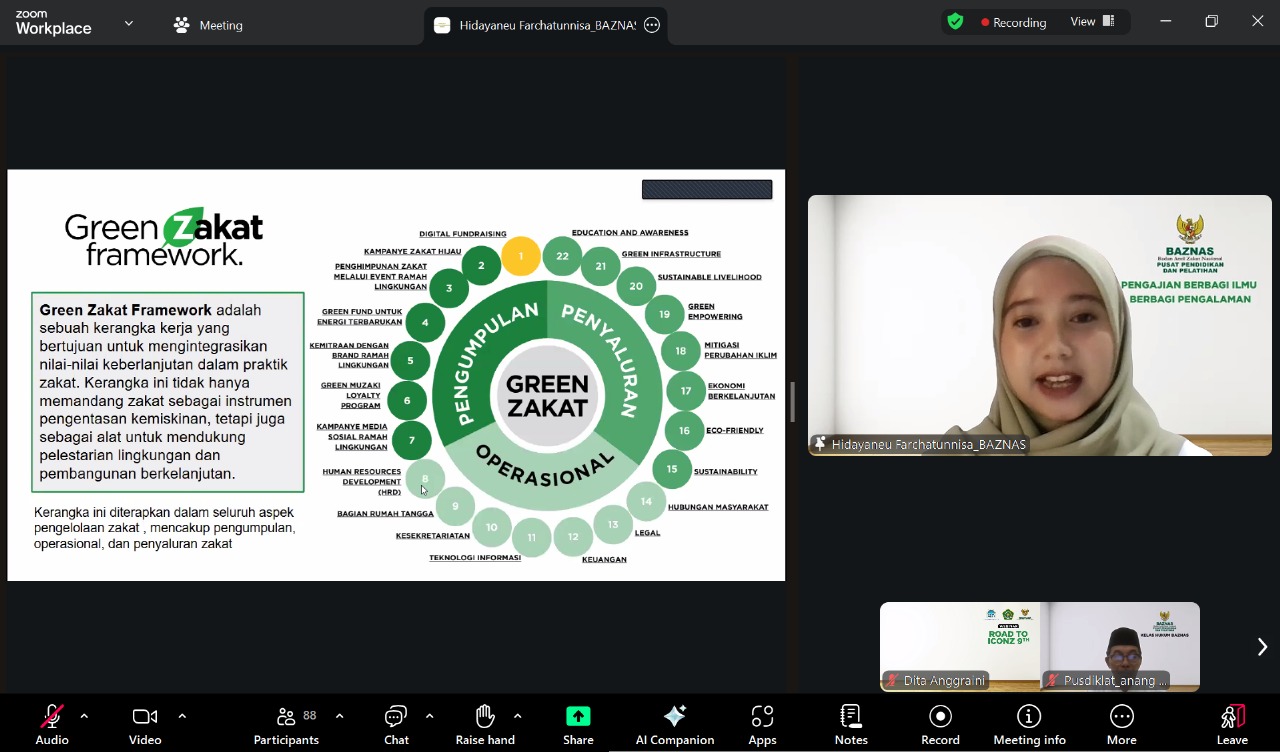
Jakarta, October 21, 2025 — The Center for Education and Training (Pusdiklat) BAZNAS held the 39th session of its Tuesday Morning Study Forum under the theme “The Urgency and Implementation of the Green Zakat Index”. The session presented Hidayaneu Farchatunnisa, M.E., Researcher at the Directorate of Research and Development of ZIS–DSKL National BAZNAS, as the main speaker, and was moderated by H. M. Nadratuzzaman Hosen, Commissioner for National Digital Transformation of BAZNAS RI.
In her presentation, Hidayaneu explained that the Green Zakat Index (GZI) is a strategic tool designed to support the implementation of the Green Zakat Framework (GZF) — a national initiative to integrate sustainability principles into zakat governance. The index allows BAZNAS and other zakat institutions to assess environmental performance in zakat programs more systematically and transparently.
“The Green Zakat Index helps us move from concept to measurement,” she stated. “It provides an evidence-based approach to ensure that zakat contributes not only to social and economic welfare but also to environmental sustainability.”
The discussion also touched upon the role of digital transformation and fiscal integration as key enablers for effective data collection, monitoring, and reporting. These aspects strengthen accountability and align zakat management with national sustainability targets and the Sustainable Development Goals (SDGs).
Through this session, Pusdiklat BAZNAS reaffirmed its role as a platform for continuous learning and knowledge exchange within the zakat community, encouraging the adoption of innovative approaches such as the Green Zakat Framework and Index.
Participants were also introduced to two major resources supporting this agenda:
Green Zakat Framework Book — bazn.as/BukuGZF
Green Zakat Index Dashboard — bazn.as/DashboardGZI2025
Both resources provide practical guidance and visualization tools to help institutions measure the environmental impact of their zakat activities and integrate sustainability into operational practices.