
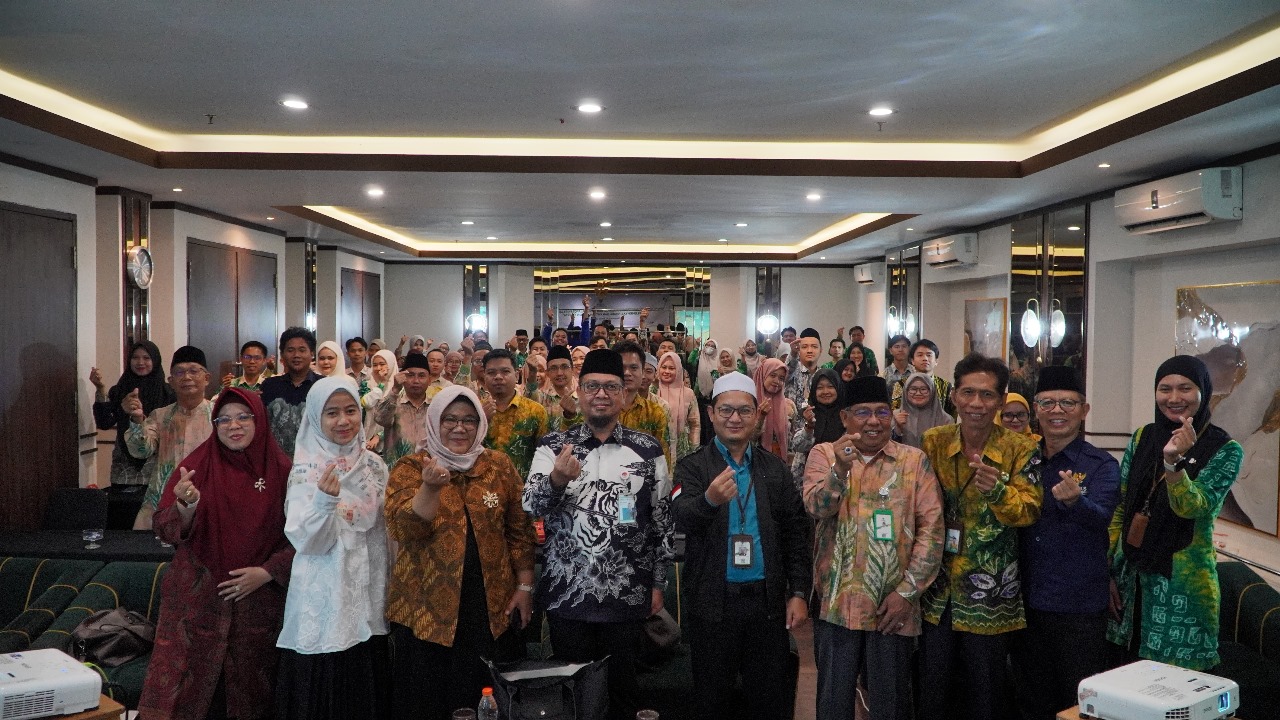
Banjarmasin, October 21, 2025 – The National Board of Zakat (BAZNAS RI), in collaboration with BAZNAS South Kalimantan (Kalsel), BAPPENAS, BAPPEDA South Kalimantan, and the National Committee for Sharia Economy and Finance (KNEKS), successfully held the second day of the Technical Guidance Program (Bimtek) focusing on strengthening synergy between central and regional institutions in the development of Islamic economics.
A key moment of the day was the discussion on the Indeks Zakat Nasional (IZN) led by Rosy Wediawaty, SE, M.Sc, M.S.E, Director of Islamic Economy and State-Owned Enterprises at BAPPENAS. She emphasized the strategic role of BAPPENAS in encouraging stronger synergy between national and regional governments to integrate IZN into the Regional Development Information System (SIPD) and the Regional Medium-Term Development Plan (RPJMD).
Her intervention highlighted three important aspects:
- Integrating IZN indicators into SIPD and RPJMD as part of data-driven development planning.
- Addressing technical and policy challenges in regions that have not yet adopted IZN into SIPD, stressing the need for regulatory support and coordination.
- Sharing best practices from South Kalimantan BAZNAS, which has successfully embedded IZN into its regional planning documents.
From BAZNAS RI, Muhammad Hasbi Zaenal, PhD, and Tri Alfiani, MIFP, also delivered substantive contributions, emphasizing the importance of institutional readiness, technical capacity, and evidence-based strategies in optimizing zakat governance through the use of IZN and Kajian Dampak Zakat (KDZ).
In addition, Dr. Dece Kurniadi, Head of the Sharia Economic Development Legal Division of KNEKS, enriched the discussion by providing insights on the legal and regulatory aspects needed to strengthen IZN’s integration into national and regional planning systems.
In the afternoon, BAZNAS RI facilitated two intensive sessions on the optimization of IZN and KDZ, offering practical guidance on how to maximize the impact of zakat programs, particularly by advancing zakat impact studies and supporting policy design with robust data and analysis.
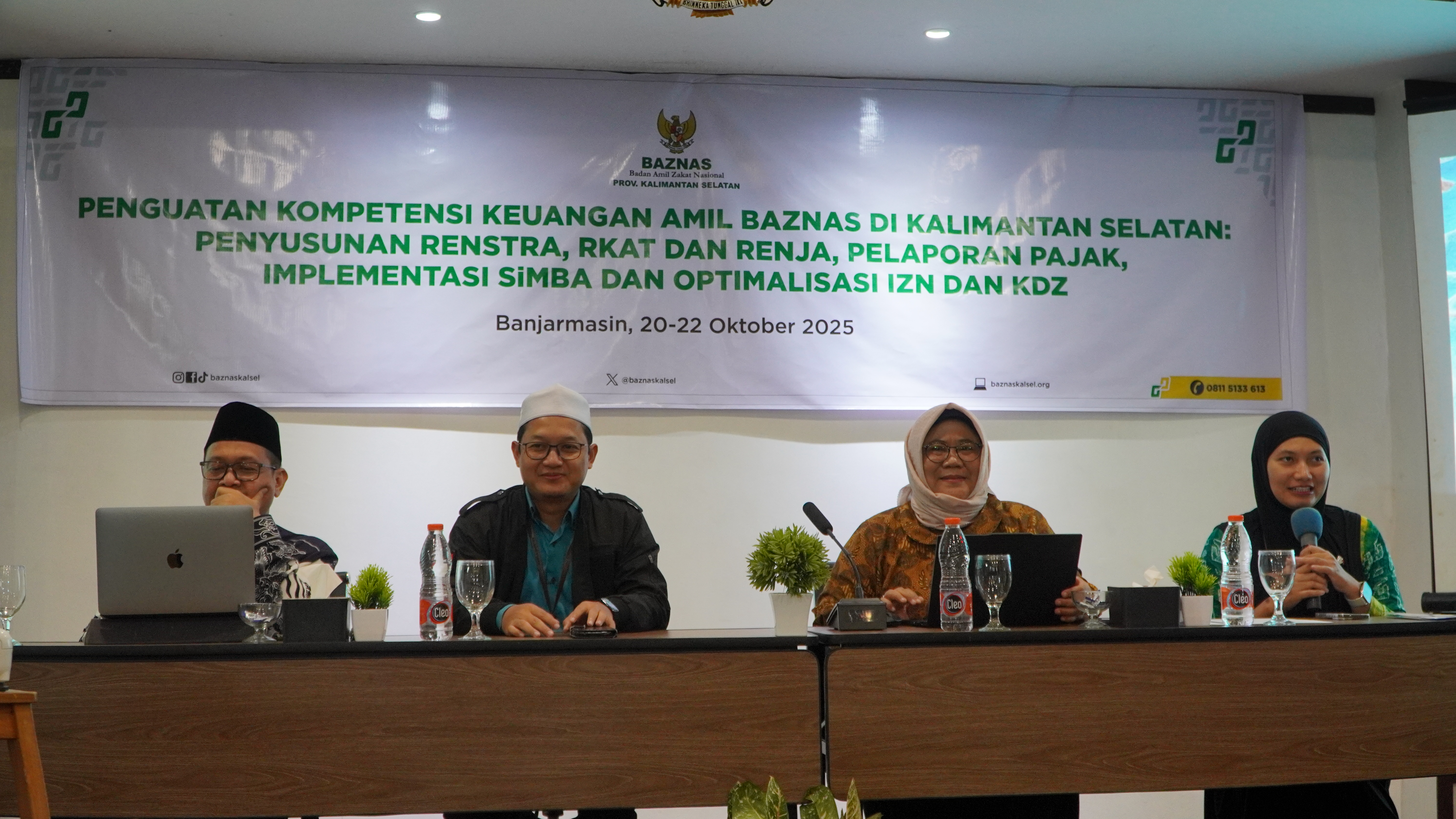
The active involvement of BAZNAS Kalsel, BAPPENAS, BAPPEDA Kalsel, and KNEKS demonstrated a strong spirit of collaboration, ensuring that zakat becomes an integral part of regional and national development strategies.
The program concluded with a shared commitment to continue strengthening zakat governance through innovation, digitalization, and policy alignment. This commitment includes the implementation of the Indeks Zakat Nasional (IZN) and Kajian Dampak Zakat (KDZ) as strategic tools to measure the performance and socio-economic impact of zakat, ensuring that zakat truly contributes to community welfare and sustainable development.